Blog

Media Reviews – Key

Each category is given a 1-5 number.

1 = Poor

5 = Strong

Categories:

1) Where is it on following the Bechdel Test

2) Strength of the writing

3) Strength of the directing

4) Strength of the acting

5) Strength of the cinematography

6) Strength of the editing

7) Strength of the sound design

8) Strength of the production design

9) Did I enjoy it?

10) Would I recommend it?


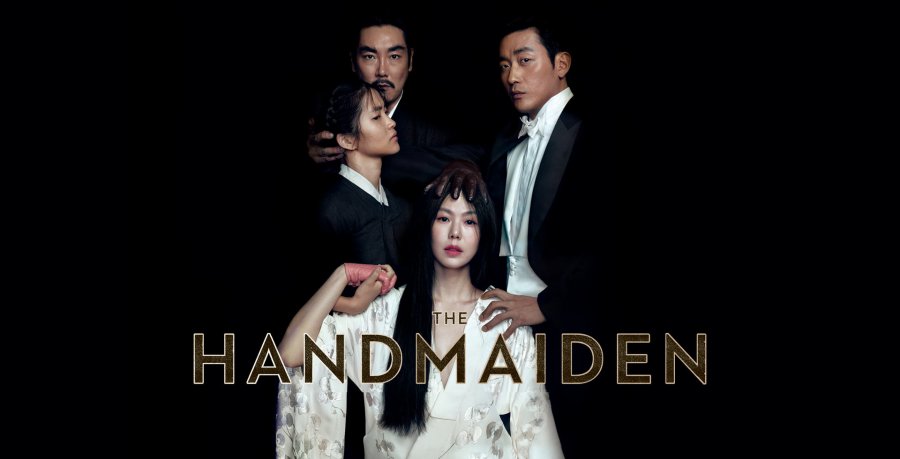
Review – “The Handmaiden” by Chan-wook Park (2016)

THEHANDMAIDEN_GRID.jpg

“The Handmaiden” is a story of 4 people. Two men and two women. It starts off pretty typical with the Japanese and British cultures focus on patriarchy. Lady Hideko is left with a fortune but has no right to it because she’s a woman. So she lives with her uncle who intends to marry her one day to take the fortune but is beat out by Count Fujiwara who gets to the dowry before he does through a scheming plan that involves an innocent (or not) peasant, Sook-Hee. And yet, a third of the way through the movie, the audience learns that everything is not as it seems and that there is a whole different plan happening the audience doesn’t even know about, one that includes deep love and intelligence.

            This film isn’t a typical film from the beginning. It’s well into the story that we learn the story is told out of chronological order through the editing. As Sook-Hee leaves her family to become the new handmaiden to Lady Hideko, she bids adieu from tear-stained faces, one of her relatives proclaiming, “it should have been me!” Well, Sook-Hee must be sacrificing something important if her close family doesn’t even want her to be the tribute.

            And yet we shortly learn that this “family member” is actually a thief and work colleague who wanted to go herself to obtain some of Lady Hideko’s fortune. But we don’t find out about this until halfway through the movie. This is because the editing is used to tell the story out of chronological order to make the audience feel as though they know what’s going on and what to expect. This happens throughout the film to show the audience that things aren’t what they seem.

            The production design is another element that is the biggest giveaway from the beginning that this is a story that things aren’t what they seem. Sook-Hee, upon arrival to the house of the uncle, is told about the unique architecture where one wing is specifically British while the other is Japanese. Two worlds happily coexisting. And yet, Lady Hideko is miserable in both cultures. Her happiness (or sadness) is dictated by the men around her just as these men (her uncle in particular) dictates the beauty of the house.

            But, the story takes an important turn at the end when Count Fujiwara is being tortured by the uncle. The Count makes an important observation in the dreaded basement: “there are no windows.” He knows that without the ventilation, he will kill the uncle while dying by mercury poison suicide. But at least the torture will be done.

            Who would have thought that the architecture of this unique structure would ultimately kill the man who built it? The uncle falls into the stereotypical maleness from both worlds. And, because of this and his desire to remain in a position of power within the patriarchal structure, he gives no thought to the efficiency of the house, only the beauty of it. Just like he only sees Lady Hideko as a thing of beauty and a tool to more fortune that actually seeing her as an intelligent, able to show great love individual.

            Another element that is crucial to the story is that of the acting. Min-hee Kim (Lady Hideko) and Tae-ri Kim (Sook-Hee) both deliver amazing performances. The performances become amazing when the audience realizes that each character has been playing multiples roles: things very much aren’t what they seem.

            Both character portray two characters: one of submissiveness (specifically to the patriarchy) and one of dominance (to themselves and each other). The first third of the movie both women are submissive (at least that’s what the audience believes). But when Lady Hideko turns Soo-Kee in to the madhouse, taking her identity, the audience can’t help but react with laughter as the real plan starts to unwind.

            And yet, that was only part of the plan as Sook-Hee was in on it all along. The real plan was to switch the identity of the count, after a marriage ceremony, to then have Lady Hideko take back her own fortune and live out her life with her actual love, Sook-Hee with no more patriarchal control.

            Both of these women, strong characters who fight (and scheme) for what they really want, the love of the other, have to play these two parts. Just like the house happily coexisting with two cultures, so, too, do both of them as they come from very different worlds. But they are able to coexist because of their love for each other which is the ultimate twist to the story: the patriarchy might define what is normal but even that can’t keep true love apart. This is important to the characters and is amazingly portrayed by these talented women in the acting.

Why “Crazy Rich Asians” is a Female Empowerment Movie

I’ve spent the past few days thinking about my viewing of “Crazy Rich Asians”. I quite enjoyed it, although it wasn’t a perfect movie. There were some characters that lacked development, for example, but I was able to get over that pretty quickly. If anything, because of the major milestone it has with representation.

But, I’m not here to talk about that since I’ll let those voices share their stories and why this is important to them. (incidentally, if you want to read a great article about the mahjong scene, check this out:

http://blog.angryasianman.com/2018/08/what-was-really-happening-in-crazy-rich.html)

What stood out to me were the strong female characters. And I’m not talking about 1 or 2. I’m talking about 5+ strong female characters that all get their stories told. Let’s visit a few of them, shall we?

The film opens with Eleanor (Michelle Yeoh) fighting for her right to be in a hotel. She has small children around her, doing her best to be the head of the family while also standing up for her rights. This strength is seen throughout the film, especially as she feels it her duty to stand up for who her son should marry. Whether you agree with her morals and tactics is a whole other conversation. The point is she knows what she wants and she fights for it.

Rachel Chu (Constance Wu), poo-poo-ca-chu, doesn’t need a man. Sure, she loves Nick (Henry Golding) but she also knows she doesn’t need him. In fact, she gives him up for his happiness and is very okay to live a life without him. She’s proud to be a professor and is more than ready to head back to New York to continue her life in that way.

Kerry Chu (Tan Kheng Hua), we find out, left an abusive marriage, moving to New York City to create a better life for her young daughter, Rachel. She even gave up the man she truly loved to save Rachel. And, I found the moment at the end of the mahjong scene beautiful when we don’t realize Kerry is there. But she is, for her daughter. Not because her daughter needs her there but she wants to be there for her daughter.

Goh Peik Lin (Awkwafina) is a force to be reckoned with in her own right. The fact that she has multiple outfits in her car for any given occasion shows she knows exactly what she wants. And, she does it.

And, one more character to discuss for now: Astrid (Gemma Chan).

I’d say she was the character I found I rooted for the most. I haven’t read the book but in researching her character it sounds like her arc varies from the movie. And, I would say that her character is one of the least developed characters in the movie. But, I still rooted for her. From the beginning, she’s trying to find her place. She is a part of this opulent family with lots of money yet wants to fit in with her husband by hiding her purchases.  But, it’s clear that she enjoys shopping. She has a huge struggle and it continues through the end.

I found it very beautiful when her husband gets out of the car on the way to the wedding and she then goes without him. I didn’t find she went because of shame, but because she desired to go. And, it’s clear she had huge examples in her life of other strong women, including that of her grandmother. Her grandmother was her date at the end, not her husband. She went as a powerful woman standing next to another powerful woman.

There are themes about tradition vs modern life, family cultures vs social cultures, etc. But, no matter if the character is following the long-held traditions or if they are embracing the modern culture, these women are all strong. They know what they want and the fight to get it.
Day 5: Media Consumption

I love everything about media. I enjoy making it. And I especially love watching it.

I’ve tried to be very aware of the media I’ve been consuming, not because I need to track it but because I want to be more present with it.

I’ve always felt torn between doing the creator route vs the critic route. So, for now, I’ve decided to just find inspiration in the media for whatever I decide to do.

Some things I’ve enjoyed over the past several weeks:

Girls on HBO

Tiny Furniture (cause once I was done with Girls I wanted to see where it was inspired from)

Uncharted 3: Drake’s Deception

Uncharted 4: A Thief’s End*

Ant-Man and the Wasp

The Incredibles II

Tag

Jurassic Park

And I continue with The Last Guardian (PS4), Will & Grace, Glow and The Last Tango in Halifax with a bit of the World Cup among it all.

*By far the best of the Uncharted Series. The ending was the most cathartic and it was just a really enjoyable experience.